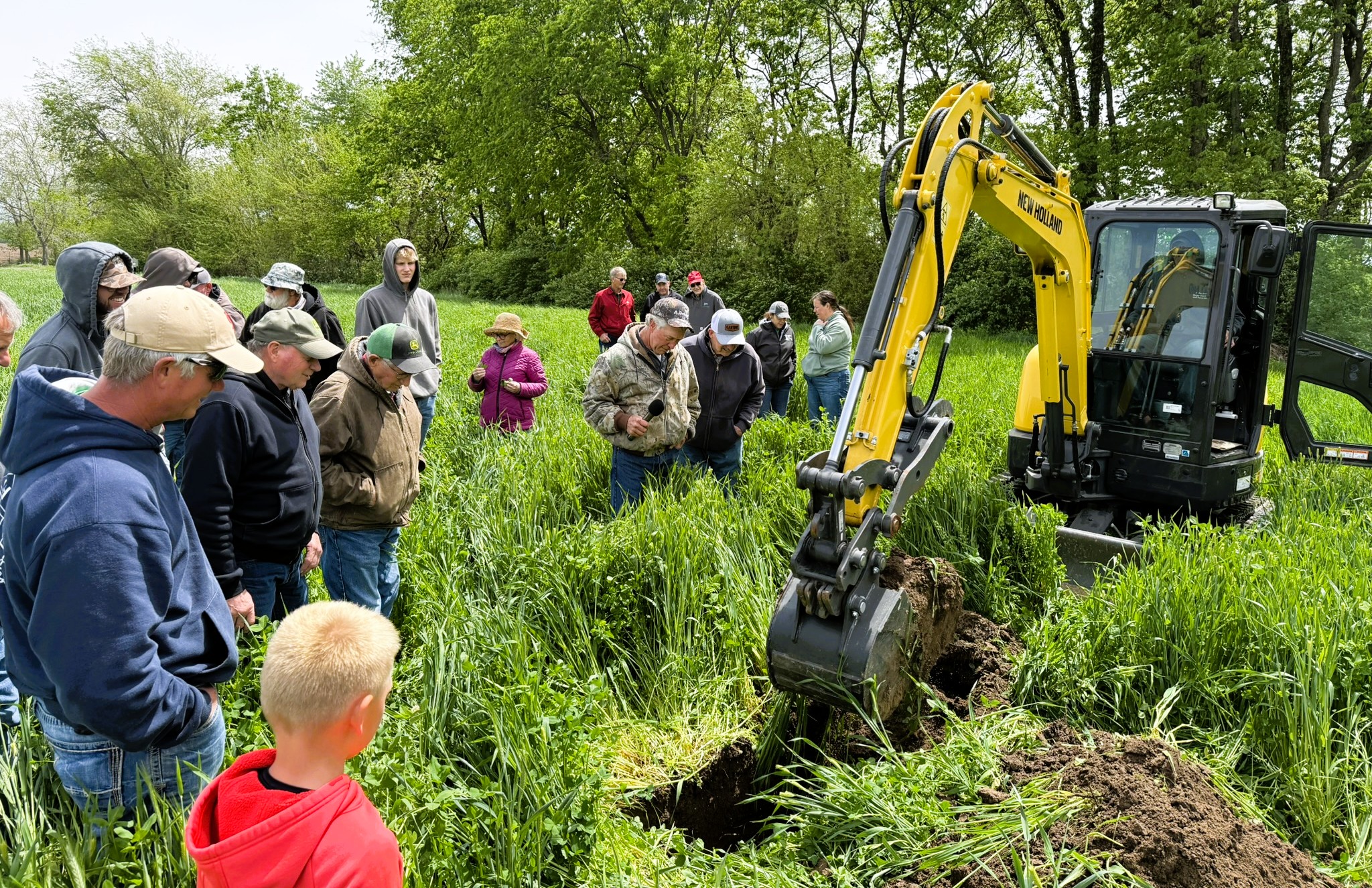
The Clinton County Farm Bureau’s Southern Illinois Regenerative Bus Tour, held on April 18th in partnership with the Southern Illinois Farmers for Soil Health, brought together approximately 30 farmers, landowners, and conservation partners for a full day of hands-on learning and in-field demonstrations focused on improving soil health and nutrient stewardship.
Participants traveled to several local farms utilizing innovative regenerative practices, gaining first-hand insight into how these systems are being implemented across southern Illinois. Attendees heard directly from local farmers about their experiences with cover crop adoption, management, and the long-term benefits they are seeing in their operations.
Throughout the tour, discussions centered on practical management decisions such as cover crop timing, termination strategies, and in-season adjustments, providing valuable, real-world perspective for those looking to adopt or refine these practices.
One of the highlights of the day was a “live” soil pit dig, which gave attendees a unique below-ground look at soil structure, root development, and biological activity. This hands-on demonstration helped illustrate the impact that regenerative practices and cover crops can have on soil health over time.
Additional in-field demonstrations included soil penetrometer readings, water infiltration testing, and Brix testing, allowing participants to evaluate soil compaction, water movement, and plant health in real time. These demonstrations reinforced how measurable data can support better management decisions in the field.
The tour also featured an experimental strawberry plot planted into cover crops, showcasing how regenerative practices can extend beyond traditional row crops and into specialty crop production. This stop sparked conversation about new opportunities for diversification and soil-friendly production systems.
To further encourage adoption of conservation practices, participants had the opportunity to take part in a cover crop subsidy drawing, highlighting available resources and support for implementing these practices on their own farms.
Overall, the tour provided a valuable opportunity for attendees to learn from one another, ask questions, and see regenerative agriculture in action. Events like this continue to strengthen local efforts to promote sustainable farming practices and support long-term soil health across the region.
Sorry, the comment form is closed at this time.